

Garage Door Springs: The Complete Guide for Knoxville Homeowners
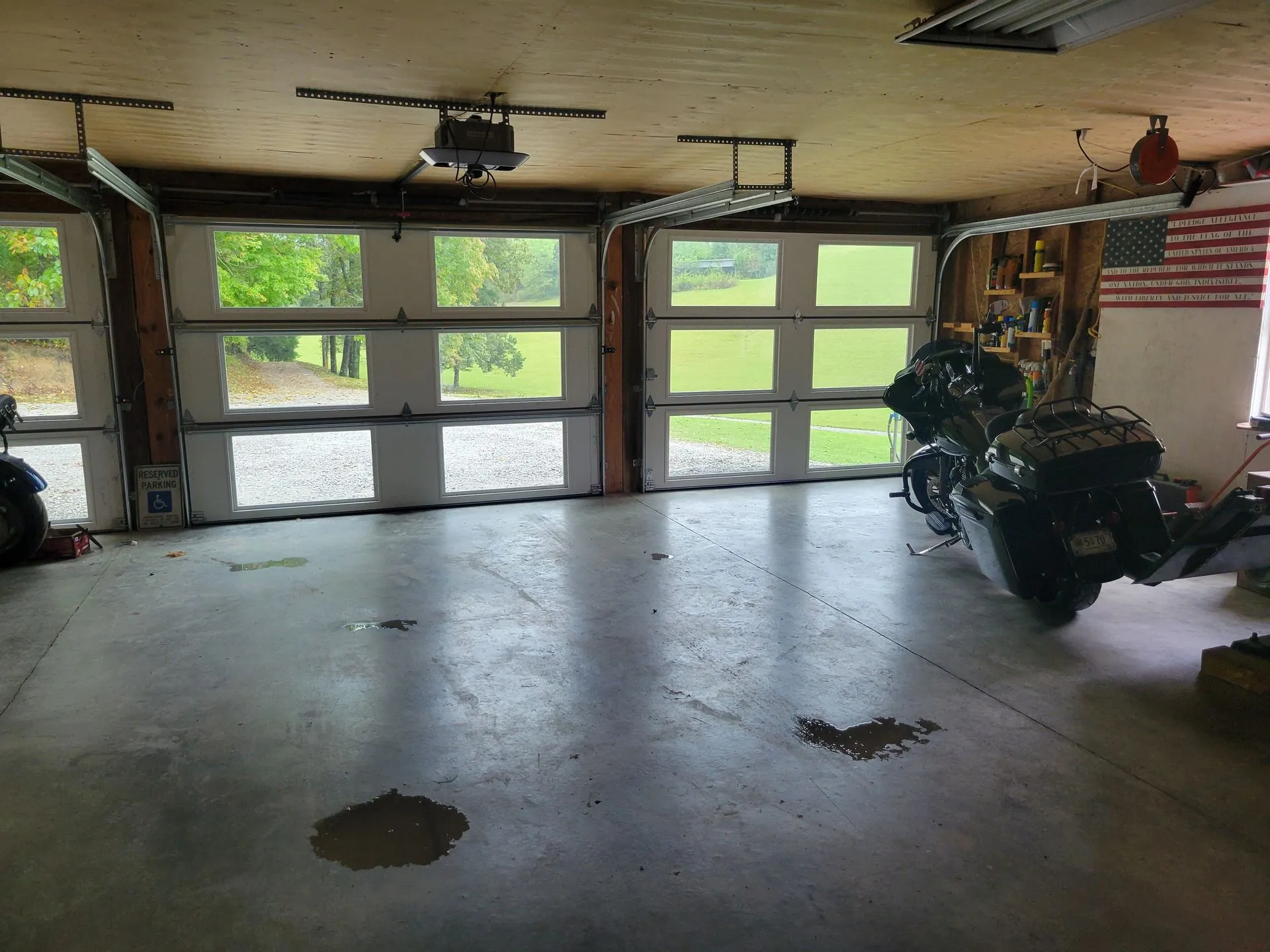
Today, garages are almost common in American homes. According to the National Association of Home Builders, 65% of new single-family homes completed in 2024 had a two-car garage. All those doors have springs, and most people don't think about them until they break.
This guide explains the different types of garage door springs, how they work, what issues to watch for, and what Knoxville homeowners should know before calling for help.
How Do Garage Door Springs Work?
How do garage door springs work, and why doesn't the opener have to lift the door? Garage doors are heavier than 100 lbs. The springs balance that weight, making the door easy to lift by hand, and the opener simply guides it
All types of garage door springs work on the same principle. The springs store energy when the door is closed by twisting or stretching. Once opened, they release that energy and do most of the lifting. The springs attach to the lower portion of the door with cables, and if a cable breaks, the door suddenly becomes dead weight.
Types of Garage Door Springs
Garage door springs come in two different types: extension and torsion. Each comes in several styles.
Torsion Springs
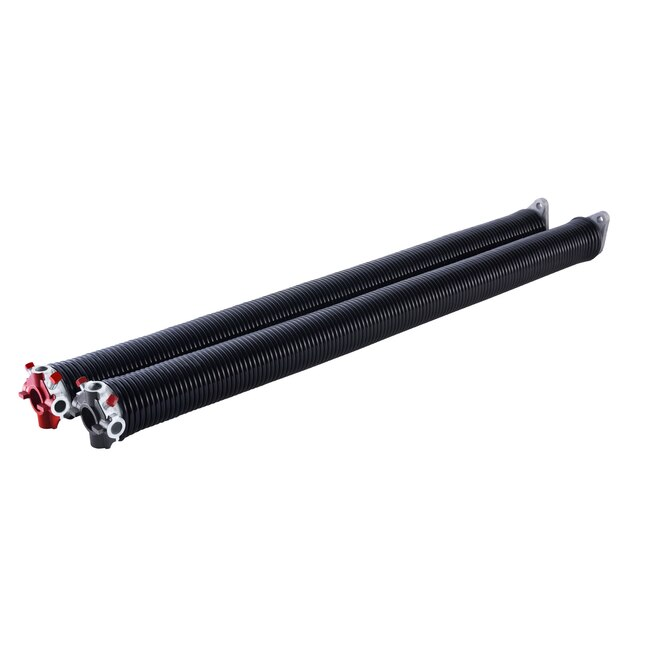
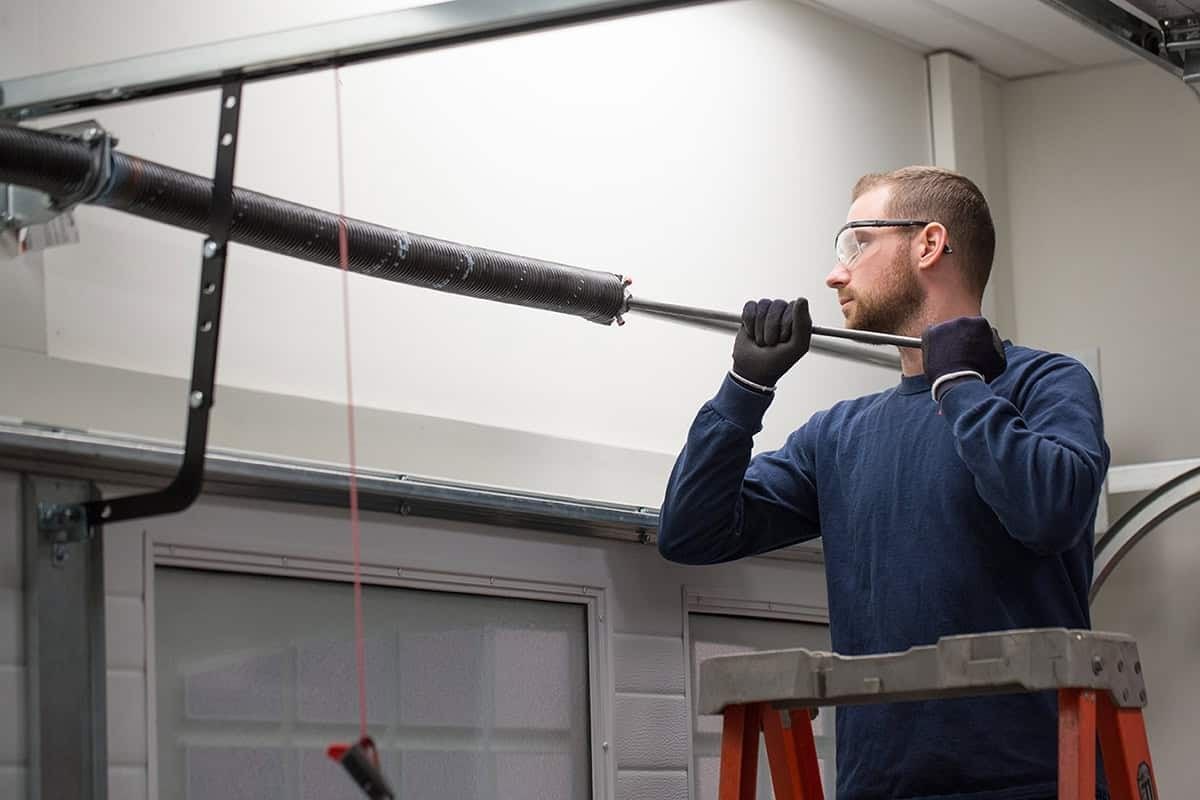
Torsion springs are mounted on a metal rod above the door, come in various shapes and sizes, and twist to store energy. The most popular type in homes is the standard torsion spring; variations of the basic idea include the early set, TorqueMaster and EZ Set.
Extension Springs
Extension springs attach to the horizontal tracks on each side of the door and extend when the door is closed. Their ends are styled:
● Open looped: open wire loops at the end; easiest to swap, but the weakest point.
● Double looped: two coils form each loop, adding strength.
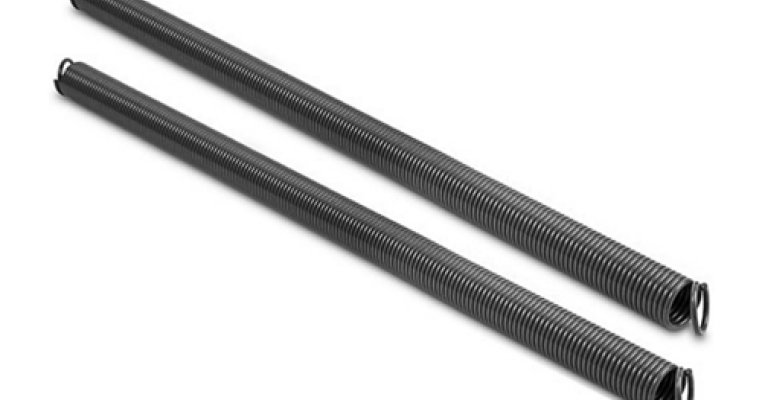
Here is how the types of garage door springs compare at a glance:.
| Spring Type | Where It Sits | How It Works | Common On |
|---|---|---|---|
| Standard torsion | On a shaft above the door | Twists to store energy | Most residential doors |
| Early set torsion | Ends of the shaft | Twists to store energy | Some residential doors |
| TorqueMaster or EZ Set | Inside or on the shaft | Enclosed or built-in winding | Specific door brands |
| Extension springs | Along the side tracks | Stretches to store energy | Older and lighter doors |
Torsion vs Extension Springs Garage Door Owners Should Compare
Which garage door spring type is best for your home? The answer to torsion vs extension springs depends on your garage door weight, safety needs and how long you want the spring to last.
| Factor | Torsion Springs | Extension Springs |
|---|---|---|
| Door balance | Smoother, more controlled lift | Can feel jerky as springs wear |
| Safety | Contained on the shaft | Need safety cables to contain a break |
| Door weight | Handles heavier doors | Better for lighter doors |
| Service | Requires precise winding | Simpler parts, still under high tension |
How Long Do Springs Last?
A standard residential spring is typically rated for about 10,000 open-and-close cycles. For a door used around four times a day, that is roughly 7 years. Busy households can wear springs out sooner. High-cycle springs are rated for more cycles and last longer before they fatigue.
Common Garage Door Spring Problems
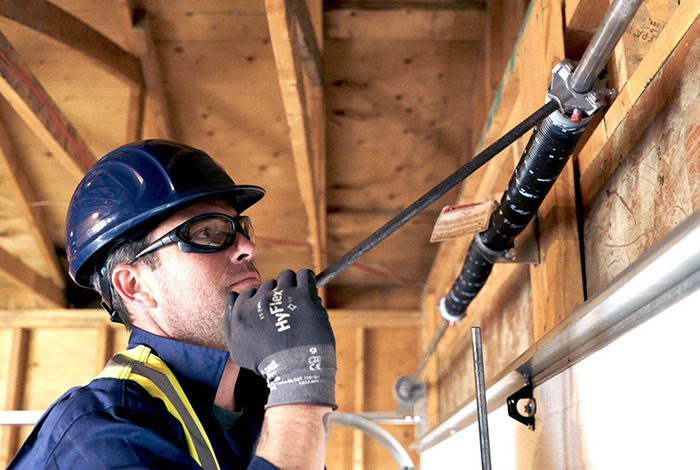
Not sure if your springs are struggling? Regardless of the kind of garage door springs you have, the warning signs are comparable. These are the most common garage door spring issues that a technician encounters:
● A loud bang in the garage: typically a broken torsion spring.
● Gap in coils: a visible break in the torsion spring.
● Door feels very heavy: the spring no longer carries its share of the weight.
● Door rises crooked or slams shut: one spring is weaker than the other.
● Stretched or sagging extension springs: they have lost tension and need replacing.
● Corrosion on the coils: corrosion weakens the wire and causes it to fail sooner.
The Door and Access Systems Manufacturers Association notes that mismatched springs, the wrong number of winding turns, moisture, and skipped lubrication can all shorten spring life, which is why all types of garage door springs need proper installation.
What to Do If a Garage Door Spring Breaks
1. Stay clear of the door and keep children and pets away.
2. Do not use the opener or try to lift the door manually.
3. Note any signs, such as a loud bang or a gap in the coils.
4. Call a licensed technician for a free estimate: (865) 556-8386.
Springs are not the only part that fails under tension. See our guides on garage door cable repair and why emergency garage door problems should never be ignored.
What Affects the Cost of Spring Repair?
The price depends on the spring type, whether one or both springs are replaced, the size and weight of your door, and any extra parts needed. For a full breakdown, read our guide to garage door spring repair cost in Knoxville, TN, or call for a free, written estimate.
Why Spring Work Is Not a DIY Job
Springs hold enough tension to cause serious injury if they release suddenly. Do not open the door, do not use the door opener, and keep children and pets away until a technician arrives.
Garage Door Springs Knoxville, TN Homeowners Should Know About
East Tennessee weather is tough on all types of garage door springs. Cold weather can make metal more prone to failing under tension. That is why Knoxville homeowners benefit from an annual tune-up and a quick visual check each season.
If a spring fails, AM PM Garage Doors will replace both torsion and extension springs, typically the same day, balance the door, and inspect the safety cables.
The team suggests replacing both springs at the same time to keep the door balanced, use OEM springs sized correctly for your door's weight, and qualify for a parts and labor warranty on all garage door repairs. If your door keeps breaking springs, a new garage door installation may be the better long-term option.
Final Thoughts
Knowing the types of garage door springs on your door, how they work, and the warning signs of failure helps you act before a spring leaves your car stuck inside. Both torsion springs and extension springs are commonly used on most modern doors and many older door types, and each needs professional attention when it reaches the end of its useful life.
Hear a bang or notice a heavy door? Call (865) 556-8386 for a free, no-obligation estimate.
FAQs
What are the types of garage door springs?
There are two main types of garage door springs: torsion springs and extension springs. Torsion springs mount on a metal rod above the door and twist to store energy. Extension springs run along the horizontal side tracks and stretch. Each type comes in several styles, such as early set torsion or double-looped extension springs.
How do garage door springs work?
Garage door springs counterbalance the weight of the door. They store energy as the door closes and release it as the door opens, doing most of the lifting through the lift cables. That is why a balanced door can be raised by hand and the opener only has to guide it.
What is the difference between torsion and extension springs?
Torsion springs sit above the door and twist, giving a smoother, more controlled lift that suits heavier doors. Extension springs stretch along the side tracks, are simpler, and are common on lighter, older doors, but they need safety cables to contain a break. Both are under high tension and need professional service.
How can I tell which type of spring my garage door has?
Look above the closed door from a safe distance. A metal rod with one or two coiled springs mounted on it means torsion springs. Long springs running parallel to the horizontal tracks on each side mean extension springs. Do not touch or adjust either type.
What are the signs of a broken garage door spring?
Common signs include a loud bang from the garage, a visible gap in a torsion spring's coils, a door that feels very heavy, a door that rises crooked or slams shut, and an opener that runs without lifting the door. If you notice any of these, stop using the door and call a technician.
Why do garage door springs break?
Springs break mainly from wear, because every open-and-close cycle fatigues the metal. The Door and Access Systems Manufacturers Association (DASMA) also lists mismatched springs, the wrong number of winding turns, moisture and rust, and skipped lubrication as factors that shorten spring life.
Can a garage door opener lift the door if the spring is broken?
It is not designed to. The spring carries most of the door's weight, so with a broken spring the opener must lift the full load and can strain, stall or fail. Stop using the opener and the door, and have a technician replace the spring before operating the door again.
Is it safe to replace a garage door spring myself?
No. Springs hold enough stored tension to cause serious injury if they release suddenly, and winding them requires specialized tools and exact calculations. A licensed technician sizes the spring to your door's weight and balances the door. AM-PM Garage Doors offers free estimates: call (865) 556-8386.
Should I replace one garage door spring or both?
On a door with two springs, replacing both at the same time is generally recommended. They wear at a similar rate, so the second spring is often close to failing, and matched springs keep the door balanced and lifting evenly.
How does Knoxville weather affect garage door springs?
Humidity is the main concern. DASMA notes that moisture causes rust, which weakens spring wire and can start fatigue cracks, so East Tennessee's humid climate makes seasonal checks worthwhile. Look for rust or a gap in the coils each season, and book a professional tune-up if you see wear.
Do all garage doors have springs?
Nearly all residential sectional garage doors use springs to balance the door's weight so it can be lifted by hand or by an opener. Most have torsion springs mounted above the door, while some use extension springs along the side tracks. Because springs hold dangerous tension, leave spring work to a professional.